

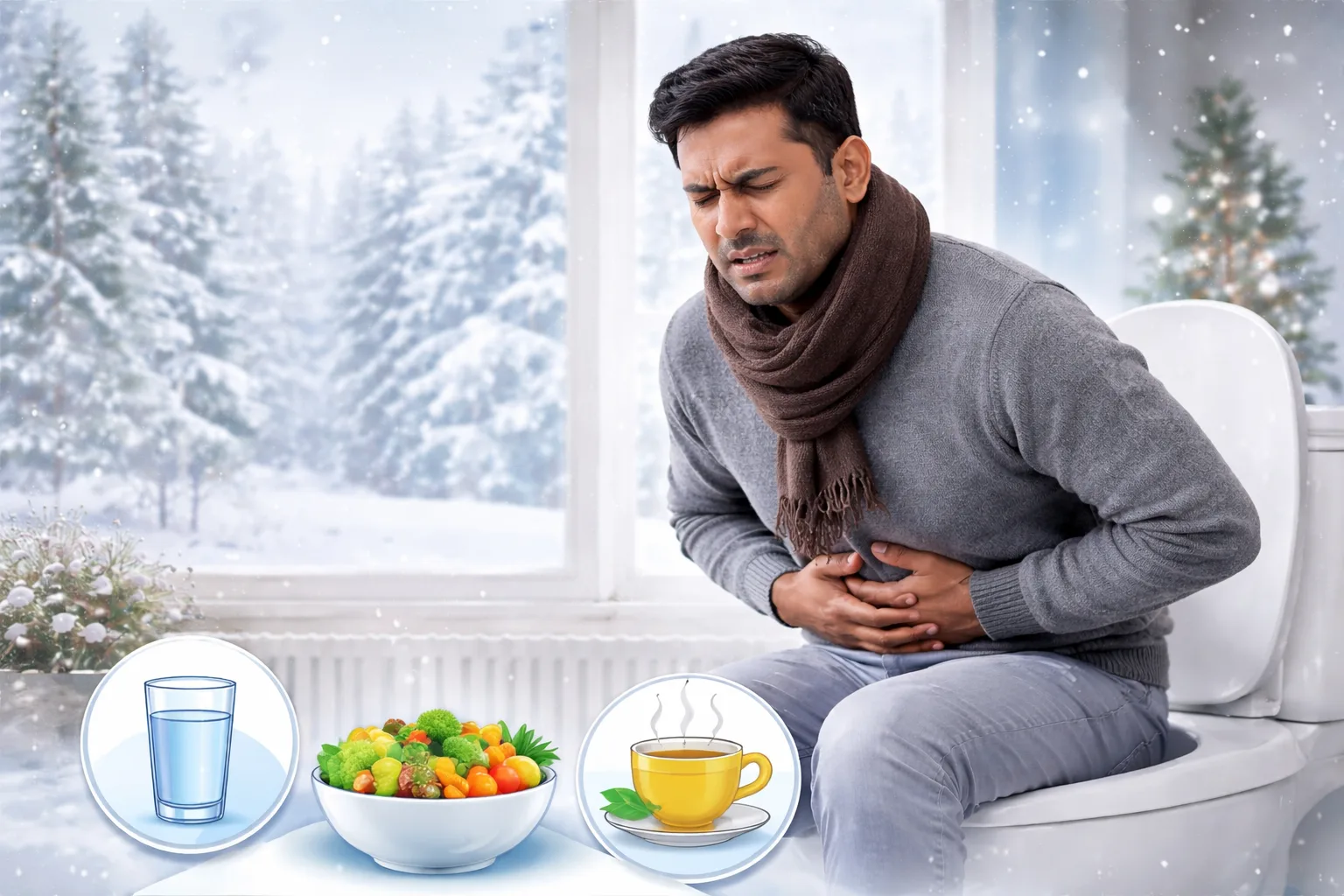
Simple and Best Ways to Prevent Constipation in Winter
Winter brings relief from the scorching heat, but for many people, it also brings an uncomfortable digestive problem – Constipation in Winter. Reduced water intake, lower physical activity, and changes in diet during colder months can slow down bowel movements, making constipation more common.
As an educational guide, this article explains why constipation worsens in winter and shares simple, practical, and medically accurate ways to prevent it, especially for individuals who struggle with regular bowel habits.
Why Is Constipation Common in Winter?
During winter, our body loses less water through sweat, which often makes us feel less thirsty. As a result, many people unknowingly drink less water. Dehydration leads to harder stools that are difficult to pass.
Other common winter-related causes include:
- Reduced physical activity due to cold weather
- Increased intake of refined, high-calorie comfort foods
- Low consumption of fresh fruits and vegetables
- Ignoring the urge to pass stools due to busy routines
Together, these factors significantly increase the risk of Constipation in Winter.
Read Also: Why Digestive problems Spike in Winter: Causes and Remedies
Simple and Effective Ways to Prevent Constipation in Winter
1. Stay Well Hydrated (Even If You Don’t Feel Thirsty)
Adequate hydration is the cornerstone of preventing constipation. Aim for 2.5-3 liters of fluids daily, including:
- Warm water
- Herbal teas
- Soups and broths
Warm fluids help stimulate bowel movements and soften stools, making them easier to pass.
2. Increase Fiber Intake Gradually
Dietary fiber adds bulk to stools and improves bowel regularity. Include both soluble and insoluble fiber in your winter diet:
- Whole grains (oats, brown rice)
- Fruits (guava, pear, apple with peel)
- Vegetables (carrots, spinach, broccoli)
- Seeds (flaxseeds, chia seeds)
Increase fiber slowly to avoid bloating or gas.
3. Maintain Physical Activity
Cold weather often reduces movement, which slows digestion. Simple daily activities can help:
- Morning walks
- Indoor stretching or yoga
- Light exercises at home
Even 20-30 minutes of movement daily can significantly reduce constipation.
4. Follow a Fixed Toilet Routine
Train your body by going to the toilet at the same time every day, preferably after breakfast. Never ignore the urge to pass stools, as this can worsen constipation over time.
5. Limit Processed and Fried Foods
Winter cravings often include fried snacks, bakery items, and refined carbohydrates. These foods:
- Slow digestion
- Lack fiber
- Increase stool hardness
Replace them with warm, home-cooked meals rich in vegetables and whole grains.
6. Add Probiotics to Your Diet
A healthy gut microbiome supports smooth bowel movements. Probiotic-rich foods such as:
- Curd
- Buttermilk
- Fermented foods
help maintain gut balance and improve digestion during winter.
7. Manage Stress and Sleep Well
Stress and poor sleep disrupt gut-brain coordination. Try:
- Adequate sleep (7-8 hours)
- Relaxation techniques like meditation
- Reducing screen time before bed
A calm mind supports a healthy digestive system.
When Should You See a Doctor?
Occasional constipation is common, but consult a specialist if you experience:
- Constipation lasting more than 2-3 weeks
- Severe abdominal pain
- Blood in stools
- Unexplained weight loss
Early evaluation helps rule out underlying digestive disorders and prevents complications like piles or fissures.
Expert Care for Constipation in Gurgaon
If lifestyle changes are not helping, professional evaluation is essential.
Dr Mukesh Nandal, Consultant Gastroenterologist, Athrava Gastro Clinic and Narayana Hospita Gurgaon, provides expert care for digestive disorders, including chronic constipation.
Consulting an experienced Gastroenterologist in Gurgaon ensures accurate diagnosis, personalized dietary guidance, and safe treatment options.
Final Takeaway
Constipation in Winter is preventable with simple lifestyle modifications-adequate hydration, fiber-rich meals, regular activity, and healthy routines. Listening to your body and seeking timely medical advice can help you maintain comfortable and regular bowel movements throughout the colder months.
If constipation is affecting your quality of life, do not ignore it. Expert guidance can make a significant difference in your digestive health.
Disclaimer
This content is intended for general educational purposes only and does not replace professional medical advice, diagnosis, or treatment. Always consult a qualified doctor or gastroenterologist for persistent constipation or any digestive health concerns.