Bloating After Diwali Feasts: What’s Really Going On Inside Your Gut
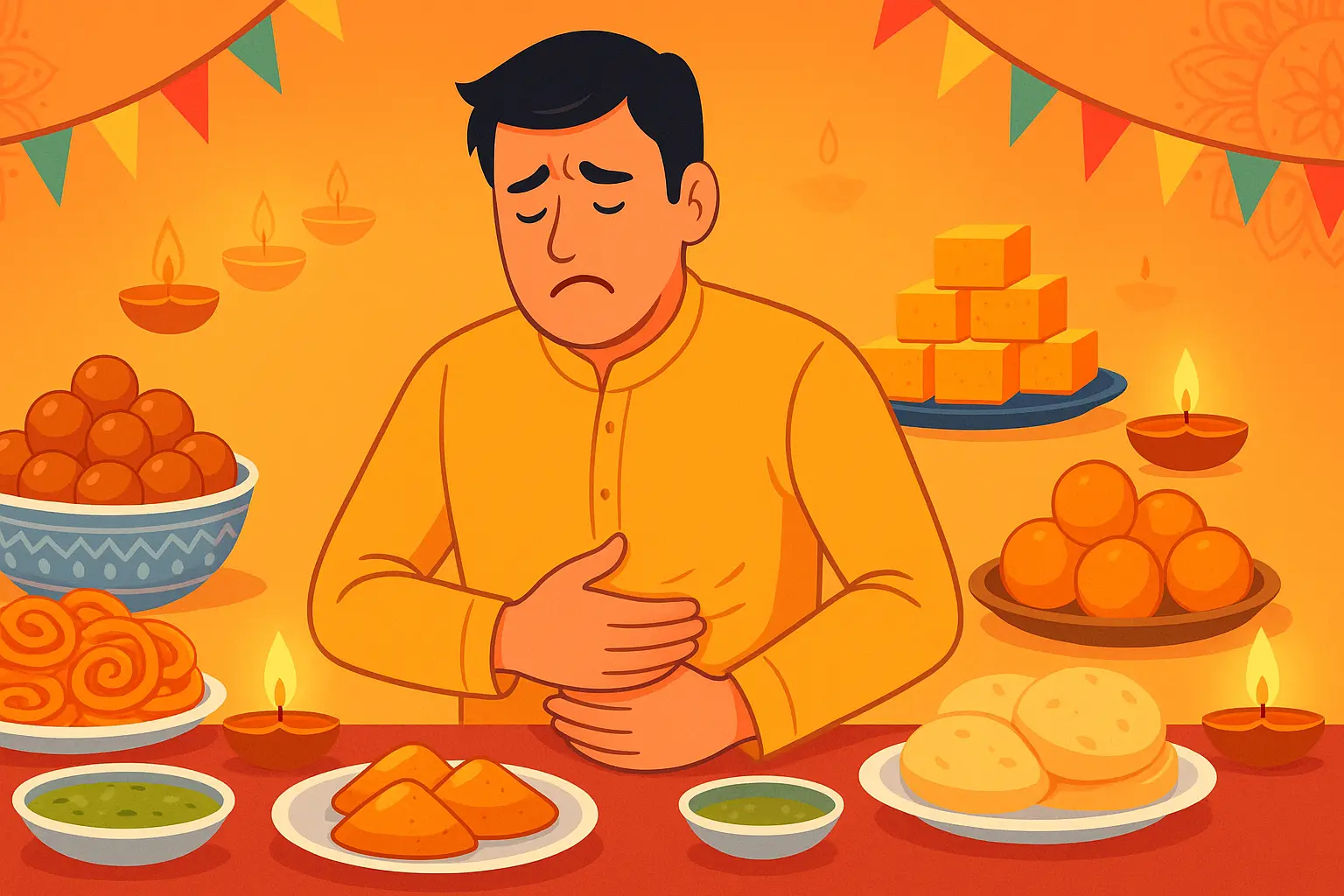
Diwali brings happiness, sweets, and endless food – but for many, it also brings bloating, acidity, and discomfort. The lavish feasts, fried snacks, and sugar-laden sweets can wreak havoc on your gut health. If your stomach feels stretched or tight after celebrating, you’re not alone! Let’s explore why bloating happens after Diwali and what you can do to feel light and comfortable again.
What Exactly Is Bloating?
Bloating is that uncomfortable feeling of fullness or swelling in the abdomen. It often happens when your digestive system becomes overloaded or gassy. You might feel like your belly is tight, puffy, or even painful to touch.
It’s not just about eating too much – it’s about how your body processes food, gas, and fluid in the intestines. Poor digestion and gut imbalance are the main culprits.
Why Bloating Happens During Diwali
Let’s break down some common reasons your gut feels upset during the festive season:
1. Overeating
Diwali meals are heavy and frequent – sweets, snacks, and multiple servings. Eating large quantities slows digestion, causing your stomach to produce more gas.
2. Fried and Oily Foods
From samosas to puris, fried foods take longer to digest. They sit in the stomach longer, increasing gas and bloating.
3. Sugar and Dairy Overload
Traditional mithai often contains refined sugar, milk, and ghee. These ingredients can cause fermentation in the gut, especially in people with lactose intolerance.
4. Carbonated Drinks
Soft drinks or soda during parties can add excess air to your digestive system, leading to trapped gas and discomfort.
5. Irregular Eating and Sleeping Patterns
Late-night dinners and irregular meal times disrupt digestion and metabolism, adding to post-meal heaviness.
How to Get Relief from Bloating After Diwali
Good news – bloating is temporary and can be managed easily with a few lifestyle tweaks. Here are some natural and effective ways to relieve discomfort and restore gut health.
1. Sip on Warm Water with Lemon
Start your morning with warm water and a few drops of lemon juice. It helps flush out toxins and kick-start digestion.
2. Add Ginger and Fennel Tea
Both ginger and fennel seeds are known for their carminative properties – they help reduce gas and bloating. Boil a few fennel seeds or grated ginger in water and sip slowly after meals.
3. Practice Portion Control
Instead of large portions, eat smaller meals spaced out. It prevents your digestive system from being overloaded.
4. Avoid Cold Drinks Post-Meal
Cold beverages can slow digestion. Opt for warm water or herbal tea to soothe your gut.
5. Move a Little
A light walk after meals – even 10-15 minutes – aids digestion and helps release trapped gas.
6. Take a Probiotic-Rich Diet
Foods like curd, buttermilk, and fermented vegetables help improve gut bacteria balance. This boosts digestion and reduces bloating naturally.
7. Limit Refined Sugar and Processed Snacks
After Diwali, give your digestive system a break. Eat fresh fruits, vegetables, and whole grains to promote cleansing and reset your gut microbiome.
How to Support Long-Term Gut Health
A happy gut means better energy, mood, and metabolism. To maintain good gut health beyond the festive season:
- Eat fiber-rich foods like oats, apples, and leafy greens.
- Stay hydrated – drink 2–3 liters of water daily.
- Sleep well; poor sleep slows digestion.
- Manage stress through yoga or deep breathing.
- Avoid unnecessary antibiotics that disturb gut flora.
Remember – your gut is the center of your overall well-being. A balanced gut equals a stronger immune system and glowing skin too!
| Remedy | How to Use | Benefit |
|---|---|---|
| Ajwain + Black Salt | Mix 1 tsp ajwain with a pinch of black salt; chew after meals | Relieves gas and improves digestion |
| Jeera Water | Boil 1 tsp cumin seeds in water; drink warm | Reduces bloating and acidity |
| Peppermint Tea | Brew fresh peppermint leaves | Calms the digestive tract |
| Banana + Warm Water | Eat one ripe banana with warm water | Helps normalize bowel movement |
When to See a Doctor
Occasional bloating is normal, especially after heavy meals. But if it’s frequent, painful, or accompanied by nausea or weight loss, consult a gastroenterologist. Chronic bloating may indicate underlying issues like IBS (Irritable Bowel Syndrome), lactose intolerance, or gastritis.
Conclusion
This Diwali, enjoy your favorite foods – but do so mindfully. Listen to your body, chew slowly, and hydrate well. A few small changes can make a big difference in how your stomach feels.
With awareness and balanced eating, you can celebrate joyfully and keep your gut health in top shape. Remember, a happy gut means a happy you!