

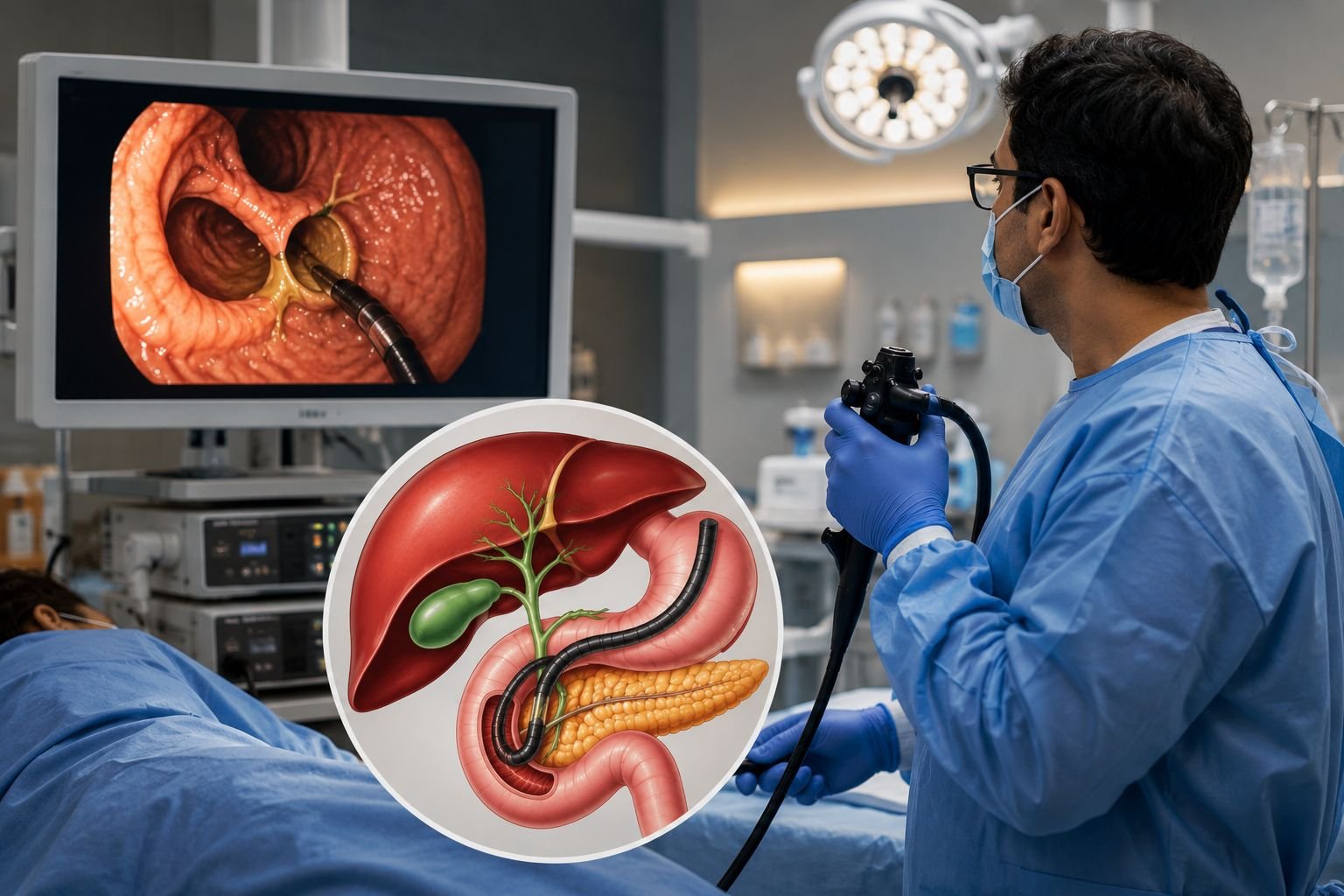
How ERCP Helps Diagnose Bile Duct and Pancreatic Conditions
Digestive health problems involving the bile ducts and pancreas can be difficult to identify in their early stages because many symptoms are similar to those of common stomach disorders. Persistent abdominal pain, jaundice, nausea, unexplained weight loss, or recurring episodes of pancreatitis often require detailed evaluation to determine the underlying cause.
This is where ERCP diagnosis in Gurgaon plays an important role. Endoscopic Retrograde Cholangiopancreatography (ERCP) is an advanced diagnostic and therapeutic procedure that allows specialists to closely examine the bile ducts, pancreatic ducts, and gallbladder drainage system. For patients seeking ERCP diagnosis in New Gurgaon, understanding how the procedure works can help reduce anxiety and ensure timely treatment.
What Is ERCP?
ERCP (Endoscopic Retrograde Cholangiopancreatography) is a minimally invasive procedure that combines endoscopy with X-ray imaging to examine the bile ducts and pancreatic ducts.
During the procedure, a flexible tube called an endoscope is gently passed through the mouth into the stomach and the first part of the small intestine (duodenum). A special contrast dye is then injected into the ducts, allowing detailed images to be captured using fluoroscopy (real-time X-ray).
Unlike many diagnostic tests, ERCP can also treat certain conditions during the same procedure, reducing the need for additional surgeries.
Why Is ERCP Recommended?
A gastroenterologist may recommend ERCP diagnosis in Gurgaon if imaging tests such as ultrasound, CT scan, or MRI suggest abnormalities in the bile ducts or pancreas that require further evaluation.
Common reasons include:
- Persistent jaundice (yellowing of the skin and eyes)
- Suspected bile duct stones
- Recurrent pancreatitis
- Unexplained abdominal pain
- Blocked bile ducts
- Narrowing (strictures) of the bile duct
- Pancreatic duct abnormalities
- Evaluation of pancreatic or bile duct tumors
- Bile leaks after surgery
- Investigation of abnormal liver function tests
ERCP provides highly detailed information that helps doctors confirm the diagnosis and determine the most appropriate treatment plan.
Conditions ERCP Can Help Diagnose
1. Bile Duct Stones
Gallstones sometimes travel from the gallbladder into the common bile duct, causing blockage.
Symptoms may include:
- Severe upper abdominal pain
- Fever
- Chills
- Yellowing of the skin
- Dark urine
ERCP helps locate these stones accurately and often allows them to be removed during the same procedure.
2. Blocked Bile Ducts
Bile duct blockage can occur due to:
- Gallstones
- Scar tissue
- Infections
- Tumors
- Inflammation
Without treatment, blockage may lead to liver damage or infection. ERCP helps identify both the location and cause of the obstruction.
3. Pancreatitis
Repeated episodes of pancreatitis may be caused by narrowing of the pancreatic duct, stones, or structural abnormalities.
ERCP helps specialists examine the pancreatic duct closely to identify the underlying problem.
4. Bile Duct Strictures
A bile duct stricture is an abnormal narrowing that can interfere with bile flow.
ERCP can determine:
- The severity of narrowing
- Its exact location
- Whether it appears benign or suspicious
Biopsy samples may also be collected if needed.
5. Pancreatic Disorders
Patients with suspected pancreatic diseases often undergo ERCP diagnosis in New Gurgaon when detailed duct evaluation is required.
ERCP may help detect:
- Pancreatic duct narrowing
- Chronic pancreatitis
- Pancreatic cysts
- Early pancreatic tumors
- Pancreatic duct stones
How Is ERCP Performed?
The procedure usually takes between 30 and 90 minutes.
Before the Procedure
Your doctor may advise you to:
- Avoid eating for several hours
- Inform the medical team about medications
- Discuss allergies
- Mention any blood-thinning medicines
- Arrange someone to accompany you home
During ERCP
You are given sedation so you remain comfortable throughout the procedure.
The specialist:
- Inserts the endoscope through the mouth.
- Reaches the small intestine.
- Locates the opening of the bile and pancreatic ducts.
- Injects contrast dye.
- Takes real-time X-ray images.
- Performs treatment if necessary.
Most patients do not remember much of the procedure because of sedation.
Can ERCP Also Treat Problems?
Yes. One of the biggest advantages of ERCP is that it is both diagnostic and therapeutic.
Depending on the findings, your gastroenterologist may:
- Remove bile duct stones
- Place a stent to relieve blockage
- Widen narrowed ducts
- Collect tissue samples (biopsy)
- Treat bile leaks
- Improve drainage from blocked ducts
This often eliminates the need for additional procedures.
Benefits of ERCP
Patients choosing ERCP diagnosis in Gurgaon benefit from several advantages:
- Accurate diagnosis
- Minimally invasive procedure
- Combines diagnosis and treatment
- Faster recovery than open surgery
- Reduced hospital stay in many cases
- Immediate relief from certain blockages
- Better treatment planning
Is ERCP Safe?
ERCP is considered safe when performed by an experienced gastroenterologist in a well-equipped medical facility.
As with any medical procedure, there are potential risks, including:
- Pancreatitis
- Infection
- Bleeding
- Reaction to sedation
- Rare perforation of the intestine
Your doctor will explain these risks and discuss whether ERCP is the right option for your condition.
Recovery After ERCP
Most patients recover quickly.
After the procedure:
- You will remain under observation until the sedation wears off.
- Mild throat discomfort may occur temporarily.
- You may experience slight bloating due to air introduced during the procedure.
- Most patients resume normal activities within one or two days unless additional treatment has been performed.
Your doctor will provide specific dietary and medication instructions based on your condition.
When Should You See a Gastroenterologist?
Seek medical evaluation if you experience:
- Persistent upper abdominal pain
- Yellowing of the eyes or skin
- Frequent vomiting
- Recurrent pancreatitis
- Fever with abdominal pain
- Dark urine
- Pale-colored stools
- Unexplained weight loss
Early diagnosis often leads to better treatment outcomes and helps prevent serious complications.
Choosing the Right Specialist for ERCP
The success of ERCP depends significantly on the expertise of the gastroenterologist and the availability of advanced endoscopy facilities.
When selecting a center for ERCP diagnosis in New Gurgaon, consider:
- Experienced gastroenterologists
- Modern endoscopy equipment
- High safety standards
- Comprehensive digestive care
- Personalized treatment plans
- Access to advanced imaging and follow-up care
An experienced specialist can accurately diagnose complex bile duct and pancreatic conditions while minimizing procedural risks.
Conclusion
ERCP has transformed the diagnosis and treatment of bile duct and pancreatic disorders. By combining advanced imaging with therapeutic capabilities, it enables specialists to identify blockages, stones, strictures, and pancreatic abnormalities with precision while often treating them during the same procedure.
If you are experiencing persistent digestive symptoms, jaundice, or recurrent pancreatitis, consulting a qualified gastroenterologist for ERCP diagnosis in Gurgaon can help identify the cause early and guide you toward the most appropriate treatment. Early evaluation not only improves outcomes but also helps prevent complications and supports long-term digestive health.
Frequently Asked Questions (FAQs)
1. Is ERCP only a diagnostic procedure?
No. ERCP is both a diagnostic and therapeutic procedure. It can diagnose conditions and treat problems such as bile duct stones, blockages, and strictures during the same session.
2. How long does an ERCP procedure take?
Most ERCP procedures take between 30 and 90 minutes, depending on the complexity of the condition.
3. Is ERCP painful?
Patients are usually given sedation, so they remain comfortable and experience little to no pain during the procedure.
4. Who needs ERCP?
People with jaundice, bile duct obstruction, recurrent pancreatitis, suspected pancreatic disease, or abnormal imaging findings may benefit from ERCP after evaluation by a gastroenterologist.
5. What is the recovery time after ERCP?
Most patients return home the same day or after a short observation period and can resume normal activities within 24-48 hours, depending on the procedure performed.