Why Do I Feel Bloated After Every Meal?
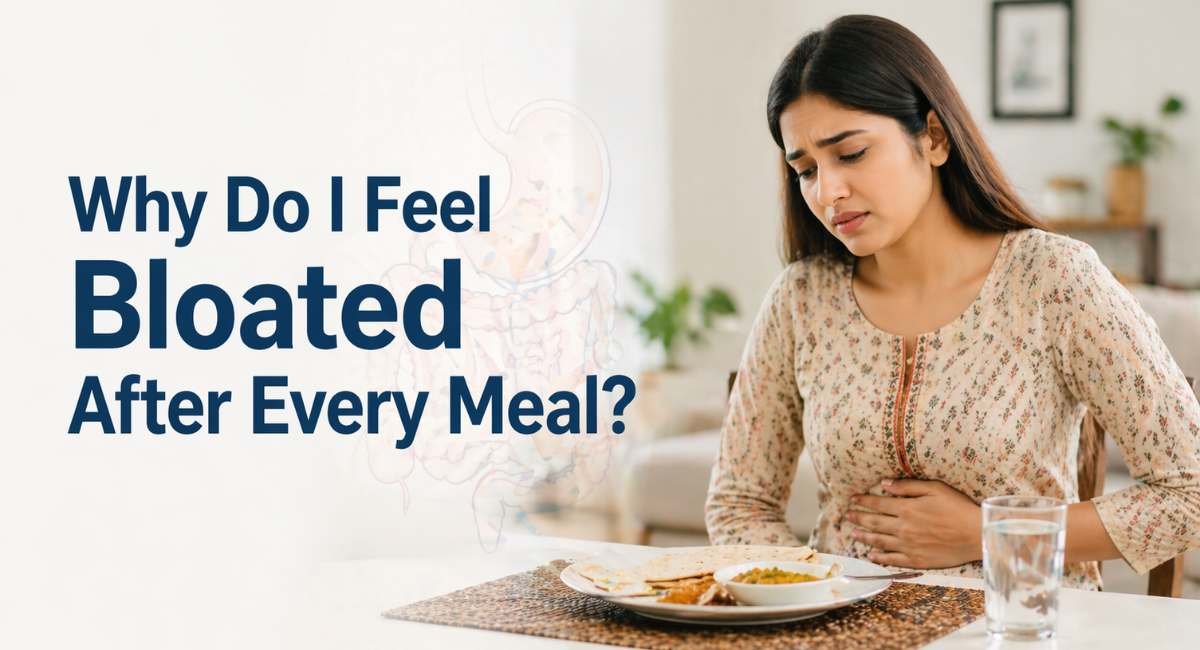
Feeling uncomfortably full, tight, or gassy after eating is something many people experience-but when it happens after every meal, it can be frustrating and concerning. Bloating after meal is a common digestive complaint in India, often linked to diet habits, gut health, or underlying medical conditions. While occasional bloating is usually harmless, frequent post-meal discomfort shouldn’t be ignored.
In this blog, we will explore the causes of bloating after meal, simple ways to manage it, and when you should consult a specialist.
What is Bloating After Meal?
Bloating after meal refers to a sensation of fullness, tightness, or swelling in the abdomen after eating. It may or may not be accompanied by visible abdominal distension (your stomach actually looking bigger).
Occasional vs Frequent Bloating
- Occasional bloating: Happens after heavy meals or certain foods
- Frequent bloating: Occurs regularly after meals and may signal digestive issues
Common Causes of Bloating After Meal
Understanding the causes of bloating after meal is the first step toward relief.
I. Overeating or Eating Too Fast
Eating large portions or rushing meals can overwhelm your digestive system. When you eat too quickly, you also swallow air, which contributes to gas buildup.
II. Gas-Producing Foods
Certain foods naturally produce more gas during digestion:
- Beans and lentils
- Dairy products
- Fried and oily foods
- Carbonated drinks
These can trigger bloating after meal, especially in sensitive individuals.
III. Food Intolerance
Food intolerance is a very common cause of post-meal bloating.
- Lactose intolerance: Difficulty digesting milk products
- Gluten sensitivity: Reaction to wheat-based foods
Even small amounts of these foods can cause discomfort.
IV. Poor Digestion / Low Enzymes
If your body lacks sufficient digestive enzymes, food may not break down properly, leading to fermentation and gas formation.
VI. Irritable Bowel Syndrome (IBS)
Conditions like Irritable Bowel Syndrome can cause chronic bloating, along with abdominal pain and changes in bowel habits.
VII. Gut Imbalance (Microbiome Issues)
An imbalance in gut bacteria (also called dysbiosis) can disrupt digestion and increase gas production.
Medical authorities like Cleveland Clinic highlight that gut microbiome health plays a major role in digestion and bloating.
When Should You Be Concerned?
While bloating after meal is often harmless, certain symptoms require medical attention:
- Persistent or worsening bloating
- Severe abdominal pain
- Unexplained weight loss
- Blood in stool
- Loss of appetite
These could indicate underlying conditions that need evaluation.
How to Reduce Bloating After Meals
Managing bloating after meal often involves simple lifestyle changes:
- Eat Slowly and Mindfully : Chew food properly and avoid rushing meals.
- Identify and Avoid Trigger Foods: Keep a food diary to track what causes bloating.
- Stay Hydrated: Adequate water supports digestion and prevents constipation.
- Exercise Regularly: Light activity like walking after meals can improve digestion.
- Include Probiotics: Curd, yogurt, and probiotic supplements help balance gut bacteria.
Expert Insight
According to Dr Mukesh Nandal (MBBS; MD; DNB Gastroenterology), Senior Consultant at Narayana Hospital Gurgaon:
“Many patients ignore frequent bloating, assuming it’s just gas. However, persistent bloating after meal can indicate underlying digestive issues such as IBS, food intolerance, or enzyme deficiency. A proper diagnosis is essential for effective treatment.”
He emphasizes that:
- Each patient requires a personalized treatment plan
- Self-medication may delay diagnosis
- Early consultation helps prevent complications
When to See a Gastroenterologist
You should consult a specialist if:
- Bloating persists despite dietary changes
- Symptoms interfere with daily life
- You experience warning signs like pain or weight loss
A gastroenterologist can recommend tests such as food intolerance screening, stool tests, or endoscopy if needed.
Conclusion
Experiencing bloating after meal regularly is not something you should ignore. While common causes include overeating, food intolerance, or gut imbalance, persistent symptoms may point to deeper digestive issues.
The good news is that with the right lifestyle changes and timely medical advice, bloating can be effectively managed. If your symptoms continue, don’t hesitate to consult a gastroenterologist for a proper diagnosis and tailored treatment.
FAQs
Why do I feel bloated after eating small meals?
This may be due to food intolerance, gut sensitivity, or conditions like IBS where even small quantities trigger symptoms.
Is bloating a sign of IBS?
Yes, frequent bloating after meal is a common symptom of Irritable Bowel Syndrome, especially when accompanied by abdominal pain or irregular bowel habits.