Diwali Without Digestive Trouble: A Gastroenterologist’s Guide to a Happy Gut This Festive Season
By Dr Mukesh Nandal, MBBS, MD (Internal Medicine), DNB (Medical Gastroenterology) – Sr. Consultant & Unit Head, Gastroenterology & Hepatology, Venkateshwar Super Speciality Hospital, Dwarka, Delhi
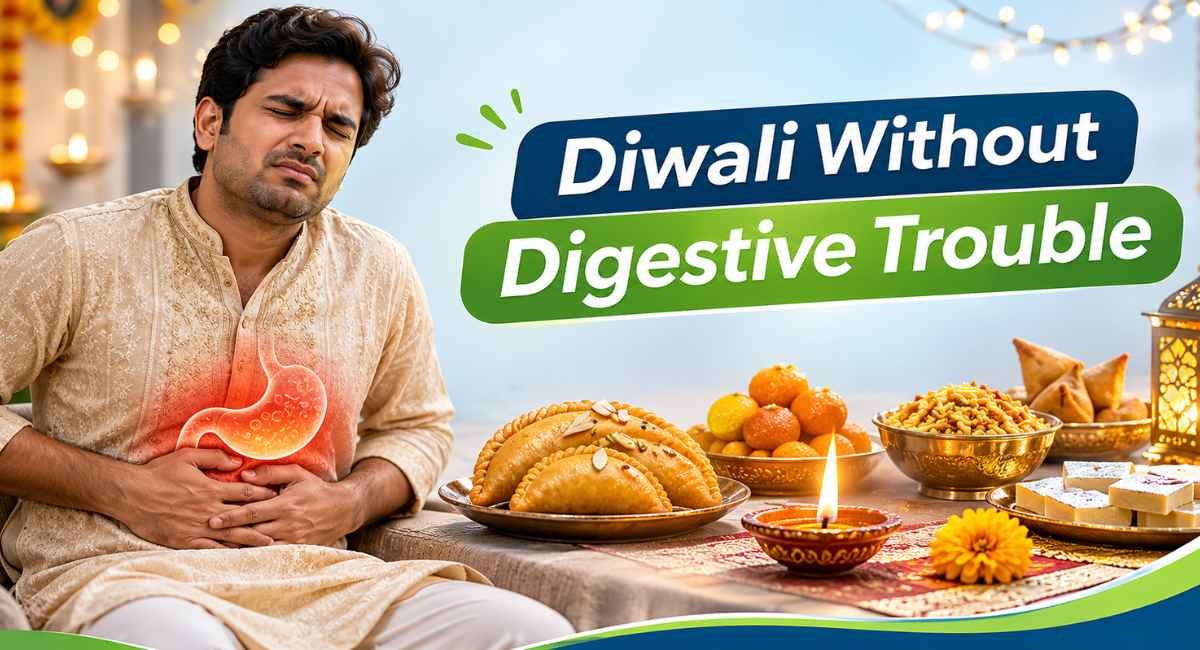
Diwali means diyas, rangoli, new clothes, family visits and, of course, plates piled high with kaju katli, gulab jamun, namkeen and mathri. It is the happiest week of the year for most of us. Yet every year, the week after Diwali brings a familiar line of patients to my OPD: heavy stomach, sour burps, chest burning at night, and no proper bowel movement for days.
The good news is that you don’t have to give up the sweets to avoid this. A few small habits are enough to protect your gut and still enjoy every laddoo.
Quick answer: To avoid bloating, acidity and constipation this Diwali, eat sweets in small portions after a meal (not on an empty stomach), limit fried snacks, drink 8–10 glasses of water, keep fibre in every meal, walk for 15–20 minutes after eating, avoid lying down for 2–3 hours after dinner, and go easy on alcohol and aerated drinks. If you have acidity, fatty liver, diabetes or IBS, be extra careful and keep taking your regular medicines.
What happens to your gut during Diwali, and why problems shoot up
Your digestive system works best on routine. Diwali breaks that routine for almost a week, and the gut feels it. Here is what usually goes wrong:
- Too much sugar and ghee at once. Mithai is rich in sugar, khoya and ghee. Fat slows the emptying of the stomach, so food sits longer, causing heaviness, burping and acid reflux.
- Deep-fried snacks all day. Namkeen, samosas, pakoras and mathri are fried, often in reused oil. They are hard to digest and are a common trigger for heartburn and gas.
- Constant grazing. Every house you visit offers a plate. The stomach never gets a rest between meals, so acid production stays high.
- Less water, more tea and cold drinks. In the rush, water intake drops. Tea, coffee and fizzy drinks add to acidity and dehydration, and dehydration is a direct cause of hard stools.
- Very little fibre. Sweets, maida-based snacks and fried food have almost no fibre. Fewer vegetables, fruits and salads mean slower bowel movement and constipation.
- Late dinners and short sleep. Pujas, card parties and late-night gatherings push dinner close to bedtime. Lying down on a full stomach lets acid travel back into the food pipe.
- Alcohol. Many festive parties include drinks. Alcohol irritates the stomach lining, weakens the valve that keeps acid down, and puts extra load on the liver.
- Smoke and pollution. Poor air quality around Diwali can also leave people feeling unwell and less active, adding to the sluggishness.
None of these is harmful once. The trouble comes when all of them stack up for five or six days in a row.
The most common festive gut problems
| Problem | How it feels | Usual Diwali trigger |
|---|---|---|
| Acidity and heartburn | Burning in the chest or upper stomach, sour taste, burps | Fried snacks, sweets on an empty stomach, late dinners, tea, alcohol |
| Bloating and gas | Tight, swollen belly, discomfort, passing gas often | Overeating, constant snacking, aerated drinks, eating fast while talking |
| Indigestion (dyspepsia) | Heaviness, fullness after a few bites, nausea | Rich, oily meals, too much khoya and ghee |
| Constipation | Hard stools, straining, no motion for 2–3 days | Low water, low fibre, less movement, irregular routine |
| Loose motions | Sudden diarrhoea, cramps | Stale or adulterated mithai, street food, contaminated water |
A word on adulterated sweets: around festivals, demand for khoya and mithai rises sharply, and quality can drop. Buy from trusted shops, avoid sweets with unnaturally bright colours or a sour smell, and finish khoya and milk-based sweets within a day or two, stored in the fridge.
10 simple ways to enjoy Diwali without upsetting your stomach
- Never start the day with sweets. A small, normal breakfast (poha, upma, oats, eggs, fruit) keeps acid in check. Sweets on an empty stomach spike acid and blood sugar.
- Have mithai as dessert, not as a meal. One or two small pieces after lunch or dinner is far gentler on the stomach than snacking on sweets all afternoon.
- Use the “one plate rule” when visiting. At each house, take a small taste of one item instead of a full plate. Saying “I’ll take it home” is perfectly polite.
- Choose baked or roasted over fried. Roasted makhana, chana, peanuts, baked mathri and dry fruits are better than bhujia and samosas. If you make snacks at home, use fresh oil and air-fry or bake where possible.
- Drink water through the day. Aim for 8–10 glasses. Buttermilk (chaas), lemon water and coconut water are good festive drinks. Cut down on cold drinks, which add gas and sugar.
- Keep fibre on every plate. Add salad, a sabzi, dal, or a fruit to each meal. This one habit prevents most festive constipation.
- Eat slowly and stop at 80% full. Talking while eating makes us swallow air and overeat, both causes of bloating.
- Walk after meals. A 15–20 minute walk after lunch and dinner helps the stomach empty and keeps bowels moving. A family walk to see the lights counts.
- Finish dinner 2–3 hours before bed. Don’t lie down right after a heavy meal. If you get night-time heartburn, raise the head end of your bed slightly.
- Limit alcohol and smoking. Both worsen acidity and harm the liver. If you drink, keep it minimal, never on an empty stomach, and alternate with water.
Smart swaps for the festive table
| Instead of | Try |
|---|---|
| Fried namkeen, bhujia | Roasted makhana, chana, mixed nuts |
| Cold drinks, sweetened sherbet | Chaas, nimbu pani (less sugar), coconut water |
| Several pieces of khoya mithai | One small piece, or dates and dry-fruit laddoo |
| Late, heavy dinner | Early, lighter dinner with dal, sabzi and salad |
| Chai every hour | Two cups a day, rest as water or herbal tea |
Who needs to be extra careful this Diwali
For some people, a festive binge can do more than cause a bad night. Please take extra care if you have:
- Acid reflux (GERD) or gastritis: Avoid fried and spicy snacks, tea and coffee in excess, and late dinners. Do not stop your prescribed medicines during the festival.
- Fatty liver: Excess sugar, sweets made with refined flour, fried food and alcohol all add fat to the liver. Fatty liver is very common in Indian adults and often silent, so festive moderation matters.
- Liver disease or cirrhosis: Avoid alcohol completely. Keep salt low, since namkeen and packaged snacks are very salty and can worsen swelling. Follow your doctor’s diet advice strictly.
- Diabetes: Sugar-free sweets are not calorie-free; many still contain khoya, ghee and dry fruits. Check sugars more often and stick to small portions.
- IBS (irritable bowel syndrome): Rich food, irregular meals and stress are common triggers. Keep meal timings as regular as you can.
- Gallstones: Heavy, fatty meals can trigger gallbladder pain. Keep fried and ghee-rich food to a minimum.
- Elderly family members and children: They dehydrate faster and are more prone to constipation and food infections. Keep them on simple home food with plenty of fluids.
Overdid it? A simple gut reset for the days after Diwali
If the festival has already caught up with you, these steps help the gut settle in 2–3 days:
- Eat light, home-cooked food: khichdi, dal-rice, curd rice, idli, vegetable soup.
- Have curd or chaas daily. They are gentle on the stomach and support healthy gut bacteria.
- Add fibre back slowly: papaya, guava, pear, soaked raisins, salads and whole grains help with constipation.
- Drink warm water through the day, especially in the morning.
- Traditional comforts in moderation: a little saunf (fennel) after meals, ajwain water or ginger tea can ease gas and heaviness for many people.
- Get back to your walk and your sleep routine. The gut follows the body clock.
- Skip sweets and fried food for a few days to let the stomach recover.
Over-the-counter antacids can relieve occasional heartburn, but if you need them for more than a few days, or keep taking laxatives for constipation, please see a doctor rather than self-medicating.
Warning signs: when festive discomfort needs a gastroenterologist
Most festive bloating and acidity settle within a few days. Please see a doctor promptly if you notice:
- Severe or persistent abdominal pain
- Vomiting blood, or black, tarry stools
- Repeated vomiting or inability to keep fluids down
- Yellowing of the eyes or skin (jaundice)
- Heartburn or acidity that lasts more than 2 weeks, or keeps coming back
- Difficulty or pain while swallowing
- Constipation lasting more than a week, or alternating with diarrhoea
- Diarrhoea with high fever, blood, or signs of dehydration
- Unexplained weight loss or loss of appetite
- Swelling of the abdomen or legs, especially if you have liver disease
Important: Chest pain or burning with sweating, breathlessness, or pain spreading to the arm or jaw can be a heart attack, not acidity. Go to the emergency department immediately.
Frequently asked questions
Why do I get acidity after eating Diwali sweets?
Sweets rich in ghee, khoya and sugar slow down stomach emptying, so food and acid stay in the stomach longer. Eating them on an empty stomach, with tea, or late at night makes acid reflux more likely.
How many sweets can I safely eat in a day during Diwali?
For a healthy adult, one to two small pieces a day, taken after a meal, is a sensible limit. People with diabetes, fatty liver or obesity should keep it lower and discuss with their doctor.
What is the fastest way to relieve bloating after a festive meal?
Take a 15–20 minute walk, sip warm water, and avoid lying down or drinking aerated drinks. Saunf or ajwain water helps many people. If bloating comes with severe pain or vomiting, see a doctor.
How do I get rid of constipation after Diwali?
Increase water to 8–10 glasses a day, add fruits like papaya and guava, vegetables and whole grains, and walk daily. Most cases settle in a few days. If it lasts over a week, consult a gastroenterologist.
Are sugar-free sweets better for the stomach?
Not always. They still contain ghee, khoya and dry fruits, and some sugar substitutes cause gas and loose motions in sensitive people. Portion size matters more than the label.
Can Diwali eating harm my liver?
One festival will not damage a healthy liver, but repeated excess sugar, fried food and alcohol add to fatty liver over time. People with existing liver disease should avoid alcohol completely.
Is it safe to take antacids during Diwali?
Occasional antacid use for heartburn is generally fine. If you need them daily for more than two weeks, get checked rather than continuing on your own.
A note from Dr Nandal
Festivals are about togetherness, and food is a big part of that joy. I never ask my patients to skip the sweets. I ask them to enjoy them wisely: smaller portions, the right timing, enough water, and a walk after meals. Your gut will thank you, and you will enjoy the whole festive week instead of spending it with a heavy stomach.
Wishing you and your family a happy, healthy and safe Diwali.
About the author
Dr Mukesh Nandal, MBBS, MD (Internal Medicine), DNB (Medical Gastroenterology), is Sr. Consultant & Unit Head, Gastroenterology & Hepatology at Venkateshwar Super Speciality Hospital, Dwarka, Delhi. He treats digestive and liver conditions including acidity and GERD, fatty liver, IBS, constipation, gallbladder and pancreatic disorders, and performs diagnostic and therapeutic endoscopy.
Facing acidity, bloating or constipation that just won’t settle after the festivals? Book a consultation with Dr Mukesh Nandal for expert evaluation and care.
Disclaimer: This article is for general awareness and patient education only. It does not replace a medical consultation. Please consult a qualified doctor for advice specific to your health.