
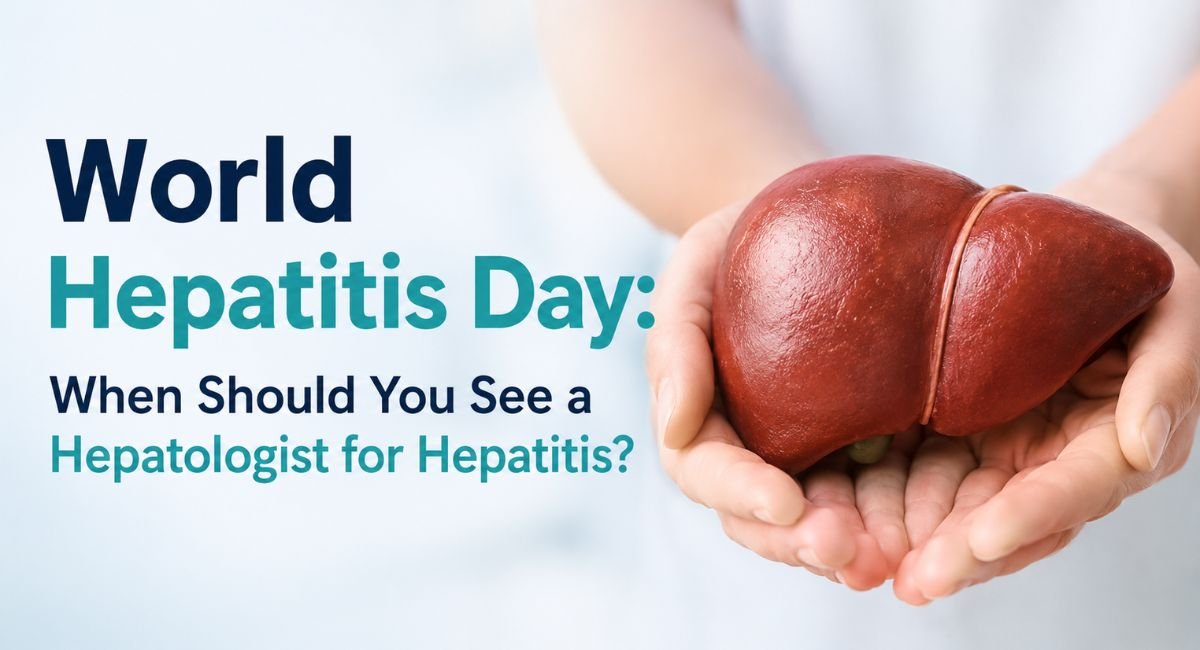
World Hepatitis Day: When Should You See a Hepatologist for Hepatitis?
Every year on 28th July, the world observes World Hepatitis Day to spread awareness about hepatitis, a condition that affects millions of people worldwide. Many people with hepatitis do not know they have it because the disease often develops silently without noticeable symptoms.
Ignoring liver problems can lead to serious complications such as liver damage, liver failure, or even liver cancer. The good news is that early diagnosis and timely treatment can prevent these complications.
One of the most important questions people ask is:
“When should I see a hepatologist for hepatitis?”
In this article, we’ll explain the signs, symptoms, and situations where consulting a hepatologist can protect your liver and improve your long-term health.
What is Hepatitis?
Hepatitis means inflammation of the liver. The liver is one of the most important organs in the body. It helps digest food, removes toxins, stores nutrients, and supports overall health.
Hepatitis can occur due to:
- Viral infections (Hepatitis A, B, C, D, and E)
- Excessive alcohol use
- Fatty liver disease
- Certain medicines
- Autoimmune diseases
Without proper treatment, hepatitis can slowly damage the liver over many years.
Who is a Hepatologist?
A hepatologist is a doctor who specializes in diagnosing and treating diseases of the liver, gallbladder, and bile ducts.
If you have hepatitis or any chronic liver condition, a hepatologist can provide expert care, monitor your liver health, and recommend the most suitable treatment plan.
Signs That You Should See a Hepatologist
Many people wait until symptoms become severe. However, early medical attention can make a significant difference.
You should consult a hepatologist if you experience:
Persistent Fatigue
Feeling tired all the time without any obvious reason could be one of the earliest signs of liver disease.
Yellow Eyes or Skin
Yellowing of the eyes or skin (jaundice) is one of the most noticeable signs that the liver is not functioning properly.
Pain in the Upper Right Side of the Abdomen
Pain or discomfort below the right rib cage may indicate liver inflammation or swelling.
Dark-Coloured Urine
If your urine becomes unusually dark despite drinking enough water, it may be a warning sign of hepatitis.
Pale-Coloured Stool
Changes in stool colour can sometimes indicate liver or bile duct problems.
Loss of Appetite
A sudden decrease in appetite, especially when combined with nausea or fatigue, should not be ignored.
Unexplained Weight Loss
Unexpected weight loss without dieting or exercise requires medical evaluation.
Swelling in the Legs or Abdomen
Fluid accumulation can occur when liver disease becomes advanced.
When Should You Visit a Hepatologist Immediately?
Do not delay medical care if:
- You test positive for Hepatitis B or Hepatitis C.
- You have abnormal liver function test (LFT) results.
- You have fatty liver disease along with elevated liver enzymes.
- You have a family history of liver disease.
- You consume alcohol regularly and have liver-related symptoms.
- You experience repeated jaundice.
- You have liver cirrhosis.
- You have been diagnosed with chronic hepatitis.
Early consultation helps prevent permanent liver damage.
How Does a Hepatologist Diagnose Hepatitis?
The doctor may recommend:
- Blood tests
- Liver Function Tests (LFT)
- Ultrasound of the liver
- FibroScan
- CT scan or MRI (if needed)
- Viral hepatitis tests
- Liver biopsy in selected cases
These investigations help identify the cause and extent of liver damage.
Treatment for Hepatitis
Treatment depends on the type and severity of hepatitis.
Your hepatologist may recommend:
- Antiviral medicines
- Lifestyle changes
- Healthy diet
- Weight management
- Avoiding alcohol
- Regular liver monitoring
- Vaccination for preventable forms of hepatitis
Many patients with Hepatitis B and Hepatitis C can now be treated effectively with modern medicines.
Can Hepatitis Be Prevented?
Yes. Many cases of hepatitis can be prevented.
Protect your liver by:
- Getting vaccinated against Hepatitis A and B
- Practising safe hygiene
- Drinking clean water
- Avoiding sharing needles
- Following safe blood transfusion practices
- Limiting alcohol intake
- Maintaining a healthy weight
- Getting regular health check-ups if you are at risk
Why Early Diagnosis Matters
Hepatitis often progresses silently. Many patients discover liver disease only after significant damage has occurred.
Seeing a hepatologist early can help:
- Prevent liver scarring
- Detect liver disease before complications develop
- Improve treatment success
- Reduce the risk of liver failure
- Lower the chances of liver cancer
Timely medical care can protect your liver and improve your quality of life.
Final Thoughts
This World Hepatitis Day, take a moment to think about your liver health. If you notice symptoms such as persistent fatigue, jaundice, abdominal pain, or abnormal liver test results, don’t ignore them.
Consulting a hepatologist at the right time can make a significant difference. Early diagnosis and proper treatment help prevent serious liver complications and support a healthier future.
Your liver works hard every day-taking care of it should be a priority.
Frequently Asked Questions (FAQs)
1. When should I see a hepatologist for hepatitis?
You should see a hepatologist if you have jaundice, abnormal liver tests, persistent fatigue, abdominal pain, or have tested positive for Hepatitis B or Hepatitis C.
2. Can hepatitis be cured?
Some types of hepatitis, such as Hepatitis C, can often be cured with medication. Other forms, like Hepatitis B, can usually be managed effectively with long-term treatment.
3. Is hepatitis always serious?
Not always. Some types resolve on their own, while others become chronic. Early diagnosis and treatment help prevent serious liver damage.
4. What tests are used to diagnose hepatitis?
Doctors may recommend blood tests, Liver Function Tests (LFT), viral hepatitis screening, ultrasound, FibroScan, and other imaging tests when necessary.
5. Can I prevent hepatitis?
Yes. Vaccination, good hygiene, safe food and water, avoiding needle sharing, and regular health check-ups can significantly reduce the risk of hepatitis.
6. What is the difference between a gastroenterologist and a hepatologist?
A gastroenterologist treats diseases of the digestive system, while a hepatologist focuses specifically on liver, gallbladder, and bile duct disorders.