


What Happens Inside Your Gut When You Eat Rice vs Millets
Introduction
The grains you eat every day do more than just provide energy-they play a key role in digestion, maintaining gut bacteria balance, regulating blood sugar, and supporting overall digestive health. Lately, many people have been comparing rice and millets because of the growing focus on gut-friendly diets and metabolic wellness.
In India, rice has long been a staple due to its ease of digestion and gentle effect on the stomach. Millets, on the other hand, are gaining attention for their high fiber content and nutritional value. Understanding how these grains are processed in your digestive system can help you make better choices for long-term gut health.
For anyone looking to improve digestion or follow a gut-friendly diet, knowing how rice and millets behave inside your body is essential.
How Rice Is Digested inside the Gut
Rice is mostly made up of carbohydrates, especially starch, which begins breaking down as you chew.
Digestion Process of Rice
Saliva enzymes start converting starch into simpler sugars in the mouth. In the stomach, rice is easy to process due to its low fiber content. Most digestion occurs in the small intestine, where enzymes break down starch into glucose, which is absorbed into the bloodstream.
Why Rice Is Gentle on the Stomach
White rice is often recommended during digestive issues because it:
- Is low in fiber
- Is soft and easy to digest
- Minimizes irritation in sensitive intestines
- Supports recovery during diarrhea or gastritis
Because of its low fiber, white rice passes through the stomach quickly, providing fast energy.
Impact on Blood Sugar
White rice digests quickly, which can cause:
- Rapid blood sugar spikes
- Shorter satiety
- Increased hunger after meals
Brown rice, which still contains fiber and bran, digests more slowly.
Rice and the Gut Microbiome
White rice provides little nourishment for beneficial gut bacteria since it’s low in fiber. Fiber feeds healthy microbes, and a low-fiber diet can reduce microbial diversity. Still, rice is useful for people with:
- Sensitive digestion
- Acid reflux
- Gastritis
- Recovery after intestinal infections
How Millets Are Digested Inside the Gut
Millets like jowar, bajra, ragi, and foxtail millet are rich in fiber, resistant starch, and plant compounds that affect digestion.
Slower Digestion of Millets
Millets take longer to digest because their fiber slows food movement, which helps:
- Stabilize blood sugar
- Increase feelings of fullness
- Reduce overeating
- Provide gradual energy release
Fiber and Bowel Health
High in both soluble and insoluble fiber, millets help improve bowel movements and stool bulk, supporting:
- Better constipation control
- Improved colon motility
- Reduced digestive sluggishness
Millets and the Gut Microbiome
Millets contain prebiotic fibers that feed beneficial gut microbes. During fermentation in the colon, these fibers produce short-chain fatty acids that support:
- Healthy intestinal lining
- Reduced inflammation
- Enhanced immunity
- Improved digestion
Why Some People Feel Bloating Initially
Suddenly increasing millet intake may cause temporary bloating as gut bacteria adapt. This can be eased by:
- Drinking more water
- Introducing portions gradually
- Cooking millets properly
Rice vs Millets: Which Is Better for Gut Health?
Both grains have benefits, but the choice depends on digestive needs.
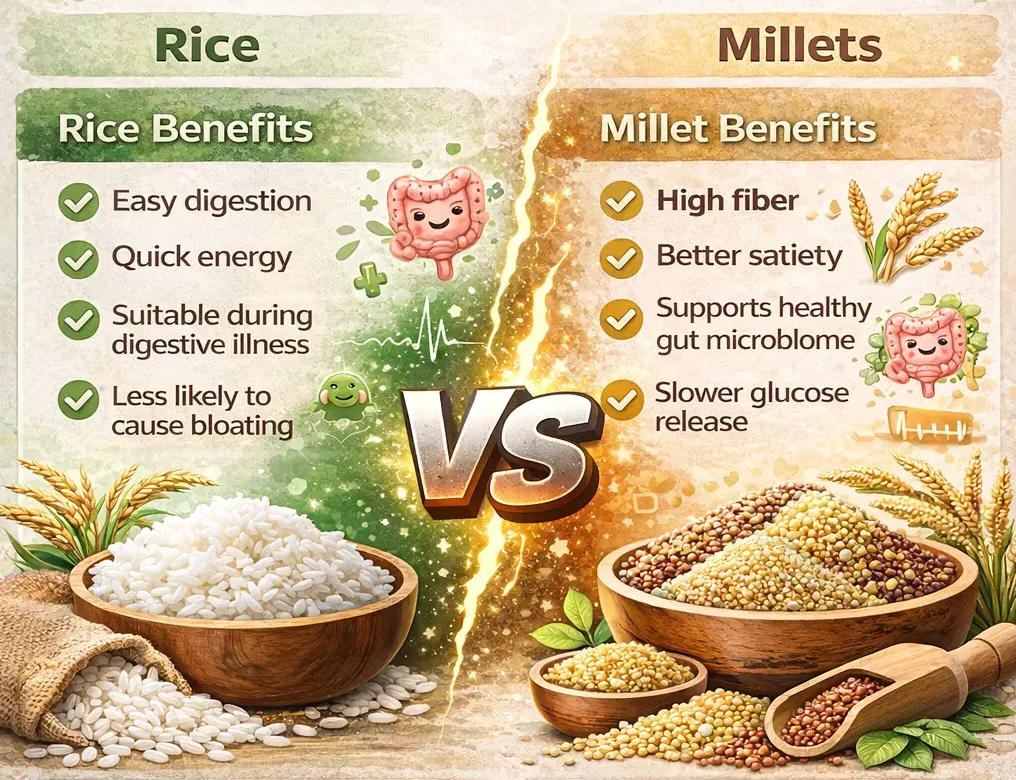
Rice Benefits
- Easy digestion
- Quick energy
- Suitable during digestive illness
- Less likely to cause bloating
Rice Limitations
- Low fiber
- Faster blood sugar spikes
- Limited support for gut bacteria
Millet Benefits
- High fiber
- Better satiety
- Supports healthy gut microbiome
- Slower glucose release
Millet Limitations
- May cause bloating if introduced suddenly
- Requires proper cooking
- Can feel heavy if overconsumed
Effect on Energy Levels and Long-Term Digestive Health
Rice provides quick energy, beneficial for sensitive digestion. Millets offer sustained energy, stabilize hunger, and support metabolic balance. A balanced rotation of both grains is ideal for long-term gut health.
Expert Advice from Dr Mukesh Nandal
Dr. Mukesh Nandal, Senior Consultant at Atharva Gastro Clinic and Narayana Hospital, Gurgaon, recommends gradually introducing millets, suggesting replacing one rice-based meal with millet two to three times a week. He advises:
- Start with small portions
- Combine with vegetables and curd
- Drink plenty of water
- Avoid sudden high-fiber intake
People with chronic acidity, IBS, or other digestive issues should seek personalized advice before making major dietary changes.
Practical Gut Health Tips While Choosing Grains
For a healthy diet for digestion, follow these simple habits:
- Rotate rice and millets instead of relying on one grain
- Pair grains with vegetables and protein
- Avoid overeating refined carbohydrates
- Prefer freshly cooked meals
- Increase water intake with high-fiber foods
When to Consult a Specialist
Persistent bloating, constipation, acidity, or irregular bowel habits may require expert evaluation. Consulting a gastroenterologist in Gurgaon is recommended if symptoms continue.
Conclusion
Understanding how rice and millets affect gut health helps you choose grains based on your digestive needs. Rice provides easy digestion and quick energy, while millets offer fiber, microbial support, and long-term digestive benefits. A balanced approach, tailored to digestion, activity, and health goals, often yields the best results. Personalized guidance from Dr. Mukesh Nandal can help create an effective plan for optimal digestive health.